Violence. Under-staffing. Corporate consolidation. Poor work-life balance. It’s no secret healthcare professionals have to grapple with difficult working conditions.
But after the COVID-19 pandemic swept across the country, health systems and providers reported trouble keeping their departments staffed. Long hours and arduous environments were causing front-line workers, especially nurses, to quit their jobs.
Burnout became so pernicious in healthcare that the U.S. surgeon general warned employers that pandemic-exacerbated burnout could risk health outcomes in the country for years to come.
Now, four years after the onset of the pandemic, health systems are still struggling with burnout. Providers say the difficulties are multi-faceted:workers are spending too many extra hours documenting patient notes, clinicians feel their complaints are ignored by management and mental health issues climb as resources shrink.
To attract and retain workers, health systems are now offering better pay and more enticing benefits. Tech companies promise their products will help automate tasks so providers can spend more time caring for patients — although some workers say the technology is adding even more to their plate.
Though hospitals are reporting improved staffing, the industry will still have to reckon with provider burnout. Read on about the latest news on burnout — and how some health systems are trying to combat it.
Healthcare labor shortage predicted by 2028, with uneven state impacts: report
Certain states and specialties will face acute shortages, while others will see a surplus of workers, according to a new study from Mercer.
By: Susanna Vogel• Published Sept. 3, 2024
An aging population with heightened care needs and lagging labor trends will create a shortage of over 100,000 critical healthcare workers around the close of the decade, according to a study from consultancy Mercer.
Certain states and specialties will weather most of the burden, according to the report. Mercer projects a deficit of 73,000 nursing assistants by 2028 as the field grows by just 0.1% per year.
New York, New Jersey and Tennessee are likely to experience the largest labor shortages across all roles by the same year. Meanwhile California, Pennsylvania and Texas are projected to have a surplus of healthcare workers.
Mercer projects a total supply of 18.6 million healthcare workers in 2028 — and a shortage of over 100,000 to address national health needs. Still, some specialties and geographies are expected to have a surplus of workers.
The nation’s physician and registered nurse populations, for example, are expected to grow modestly until 2028. Both fields are projected to have a surplus of workers nationwide by 2028, with registered nurses anticipated to have a surplus of about 30,000 by 2028.
However, even in growing fields, workers may be scarce in certain geographies. Mercer predicts California, Texas and New York will face deficits of physicians. Pennsylvania, Indiana and Minnesota will have a surplus. Registered nurses will be most scarce in New York, Tennessee and Massachusetts, according to the report.
Some shortages — such as the shortage of nursing assistants — are in part due to some professions growing at more sluggish rates than others.
Nurse practitioners are expected to grow at the fastest annual rate among the occupations reviewed by Mercer, while nursing assistants will grow the slowest.
While the projected shortage is an area for employers to watch — and consider when developing compensation strategy and technology to support smaller teams — the shortage does not compare to the spike in attrition seen during the COVID-19 pandemic, according to the report.
Healthcare workers reported high rates of burnout following the onset of the COVID-19 pandemic due to increased uncertainty, a rise in workplace violence and increased staffing pressures. Burnout contributed to elevated rates of attrition industry-wide.
Mercer notes that the field lost 100,000 workers between 2020 and 2022 alone.
To prevent a similar exodus now, employers should manage employee burnout early on to prevent an “endless spiral of attrition” related to burnout, the authors concluded.
“Given that attrition is often driven by burnout, healthcare systems need to ensure the well-being of existing employees. This can be done by fine-tuning the employee value proposition with respect to pay and benefits, schedule flexibility, career growth opportunities and job satisfaction,” according to the report.
Mercer said employers in hot markets might adjust their compensation strategies to help them recruit talent from less constrained regions — an option that wasn’t available during the pandemic, when shortages were far-reaching.
“Healthcare organizations may need to pivot recruitment beyond typical boundaries to meet talent where it is,” the report notes. “Whereas some states and metropolitan areas will have significant labor shortages, others will have surpluses, and it will be critical to know where those surpluses are.”
Mercer predicts that employee pressure on compensation will continue if talent shortages intensify.
Healthcare workers have already campaigned for increased wages and benefits through union organization and strikes. In 2023, the industry witnessed its largest strike in decades when over 85,000 Kaiser Permanente workers walked off the job in order to achieve a 21% raise over four years.
Article top image credit: andresr via Getty Images
Women in healthcare report higher levels of burnout than male colleagues, study finds
A lack of autonomy and gender inequity at work are correlated with women’s burnout.
By: Susanna Vogel• Published Feb. 22, 2024
Over the past four decades, women working in healthcare have reported significantly higher levels of stress and burnout than their male counterparts worldwide, according to a new literature review.
Gender inequity in the workplace, poor work-life integration (i.e., being encouraged to prioritize caregiving over professional development) and a lack of autonomy at work correlated with increased burnout, according to the study published February 2024 in Global Advances in Integrative Medicine and Health.
Some professional and personal factors insulated female healthcare professionals from burnout. Women who worked in supportive environments that offered flexible schedules and employee recognition, or those who had strong relationships inside and outside of the workplace reported higher levels of well-being.
For the review, researchers studied healthcare professionals’ well-being — their integrated mental and physical health as it relates to life satisfaction, sense of purpose and ability to manage stress — and absence of well-being, or burnout.
The analysis drew from 71 studies of well-being among healthcare professionals published in 26 countries from 1979 to 2022.
In a quarter of the studies, women in healthcare said work-life integration fueled dissatisfaction. Women said they were encouraged to prioritize the needs of their children and families over their own personal and professional development, even when they earned higher incomes than their partners.
Another quarter of articles found limited professional autonomy and poor working conditions contributed to women’s burnout levels. Women were more likely than men to feel “powerless” and constricted by time pressures, as well as to spend more emotional energy on complex patients than their male colleagues, according to the study.
The study warned burnout could have “devastating effects on healthcare professionals and the quality of patient care. “ Its authors advocated for increased training for gender sensitivity and bias, as well as the structural challenges women in healthcare occupations face.
For caregivers — many of whom are women — burnout has been even worse. Healthcare workers with high childcare responsibilities were 80% more likely to report burnout and more likely to consider reducing their hours or leaving their roles, according to a study published in JAMA.
Article top image credit: Jirapong Manustrong
‘Seconds matter’: Canopy CEO Shan Sinha on healthcare violence and protecting workers
Shan Sinha, CEO and founder of wearable safety company Canopy, discusses healthcare workplace violence and technology’s potential to help protect workers.
By: Brian Horowitz• Published Sept. 26, 2024
Each day, healthcare workers are threatened with violence in the United States.
A survey released in February by National Nurses United found that 8 in 10 nurses experienced at least one incident of workplace violence in the past year.
The amount of workplace violence in healthcare prompted Shan Sinha to found wearable safety company Canopy. The company offers a personal duress button that hospital workers can clip to their badge or clothing to alert system security. The button also works in home health settings as part of an expansion launched this year — Canopy says it covers more than 200,000 healthcare workers.
Healthcare Dive caught up with Sinha, the CEO and founder of Canopy, to talk about workplace violence, technology and how health systems can create an environment that fosters safety.
Editor’s note: This interview has been edited for clarity and brevity.
HEALTHCARE DIVE: Why do you think healthcare workers are more likely to experience violence compared to employees in other industries?
Permission granted by Canopy
SHAN SINHA: When [healthcare workers] get assaulted or attacked by patients, [the incidents] tend to go underreported. Sadly, staff tend to conclude that it is just part of the job.
Hospitals are raw, emotional places. Your loved ones are needing care. The system is under stress. Staffing ratios are way lower than they used to be.
When we looked at all the data coming out of the pandemic, clearly there was a rise in violence and assault against staff, but it hasn't receded over the last few years. And it affects retention; it affects burnout. It's one of those things that obviously is going to show up if you're trying to take care of patients on a day-to-day basis.
Imagine having to take care of that patient at 11 p.m. at the end of a long, dark corridor. That can be a pretty anxiety-inducing circumstance when you don't know what could happen.
How does the Canopy button work? Is pressing it easier than just using a phone to contact help?
When a healthcare worker encounters incidents, they have the potential to escalate very quickly. Seconds matter. If you're in a situation like that, you've entered into a mode where your brain isn't even able to think, and so the ability to instantly press a button and know that it works like the way it might if you called 911 is hugely critical.
The button just clips onto the back of your ID badge. It's super lightweight. What's nice is whenever you show up at work, it belongs to you, so you carry it with you everywhere you go. You know that button is going to be with you when you need it.
When you press that button, it works with a network of devices that we plug in all around the hospital. The system can pinpoint the identity of the individual and where they are in that hospital, whether they're in the parking lot, or on the fourth floor of building Y. That information is then transmitted and delivered instantly within milliseconds to central security, who can dispatch an officer. It is transmitted to nearby coworkers who can get a note that says this patient needs help in room 403. If you happen to be going into somebody's home, you can connect to law enforcement and send 911, and then coordinate that with your hospital's security team.
How can healthcare organizations create a culture of safety going forward?
It's obvious you're going to invest in protecting your caregivers against pathogens — gloves, masks, scrubs, all those sorts of things — but safety against this form of violence at work, I think there's an opportunity to really think about that as a top priority.
The way you create a culture of safety is by prioritizing the investment in keeping your staff safe, and I think that will result in both qualitative and quantitative benefits in fewer nurses to retrain. We know that training a nurse costs at least $50,000 per individual. These are high-skilled workers, and holding on to those assets, investing in them, supporting them will obviously result in significant benefits, not only to the health system but to patients themselves.
Article top image credit: Brandon Bell / Staff via Getty Images
Dissatisfaction with EHR increases nurses’ burnout risk: report
Nearly one-third of nurses experiencing symptoms of burnout cited their electronic health records as a contributor, according to Klas Research.
By: Emily Olsen• Published Aug. 22, 2024
Nearly one-third of nurses experiencing symptoms of burnout in 2023 said their electronic health records were a contributor, according to a report by healthcare IT research firm Klas.
Of those nurses, 40% said they were likely to leave their organization within the next two years.
Many nurses don’t think they have a say in governance over the EHR at their organizations. Sixty-five percent of survey respondents didn’t agree that they have a voice in EHR changes, while 39% said they don’t feel they can ask for fixes.
One long-term frustration for clinicians is the amount of time and effort it takes to document care or perform other administrative work in EHRs, which can contribute to burnout.
Thirty-three percent of nurses reported symptoms of burnout in the Klas survey, which included feedback from roughly 75,000 respondents.
For example, nurses argue they face technological challenges, like slow loading times or unplanned system downtime. Forty percent of nurses reported their EHR doesn’t have the expected response time, while nearly a quarter said the record isn’t reliable.
Stress and burnout among nurses is a significant challenge for the healthcare workforce. Some research has found a large chunk of nurses are considering changing jobs or leaving the profession entirely due to burnout — a major problem for health systems who are still recovering from the workforce shortages and heightened labor costs they faced during the COVID-19 pandemic.
EHR challenges contribute to nurse burnout
Percentage of respondents citing contributors to burnout
Even though nurse satisfaction with their health records has increased, they still report insufficient training and system reliability problems that could contribute to burnout, according to the Klas report.
Training is also key to nurse satisfaction with their EHRs, but many nurses say their education was lacking — nearly 40% reported their ongoing EHR education wasn’t sufficient, according to Klas. Forty-two percent of respondents reported their initial training wasn’t up to snuff, while 32% said it wasn’t specific to their workflow.
Poor EHR response time affects nurse perception of system reliability
Percentage of nurses who report reason for dissatisfaction with EHR infrastructure
Improvements and upgrades aren’t always helpful to nurses either, according to the survey. Sixty-seven percent of respondents didn’t agree that upgrades improved the EHR. More than 70% said EHR optimizations weren’t delivered quickly enough, and 60% felt fixes weren’t timely. Half said changes to the EHR weren’t well communicated to them.
Article top image credit: SDI Productions via Getty Images
Healthcare workers’ compensation rose in 2023 amid staffing shortages: report
Medical groups are increasing compensation in an attempt to lure talent.
By: Susanna Vogel• Published July 1, 2024
Compensation for critical healthcare roles rose in 2023 amid heightened demand for workers, according toa survey from the Medical Group Management Association.
Median total compensation for medical assistant positions and healthcare management positions grew 3.3% and 7%, respectively, between 2022 and 2023, the survey found.
However, increasing compensation cannot fully address labor shortages, according to the MGMA. The most successful medical groups are employing a broad range of strategies to optimize their workforce, including building new graduate programs and leveraging artificial intelligence.
In response, employers have increasedcompensation in an attempt to lure workers back, according to the MGMA. Over the past five years, registered nurse median compensation has increased by 19.6%, medical assistant compensation surged by 20.6% and licensed practical nurse compensation rose by over 22%.
Some employers also offered enhanced benefits in 2023 relative to 2022, such as reimbursement and paid time off for education, new wellness benefits, bettermental health resources and paid leave.
However, despite the increased investment in compensation and benefits, nearly eight in ten employers said they spent more time trying to hire in 2023 than in previous years, according to an OctoberMGMA survey.
Meanwhile, some employers mayhave reached the maximum of what they’re willing to offer in a benefits package. In a June 2024 survey, 70% of respondents told the MGMA that their benefits packages stayed largely the same compared to 2023, while 9% said their benefits offerings had declined compared to 2023.
Some healthcare providers told MGMA that further benefit increases would be contingent on improved financial performance, while others said they already offered competitive packages.
Employers’ reluctance to increase benefits and perks could also be due to a lack of return on investment. The MGMA found that some of the lingering staffing shortage in 2024 isdue to structural “bottlenecks” across the healthcare labor market that are unlikely to be solved through increased compensation alone.
For example, since the pandemic, new nurses have been hard to come by as budget cuts and a lack of faculty have forced baccalaureate nursing programs to turn away record levels of qualified candidates, according to the American Association of Colleges of Nursing, which tracks enrollment trends over time.
In the face of such bottlenecks and macroeconomic pressures, Halee Fischer-Wright, president and CEO at MGMA, said in a press release that compensation increases cannot be the only tool in a recruiter’s toolbox.
“Amid heightened patient demand and increased financial pressures, medical group practices continue to face a tight labor market where competition for clinical and administrative roles remains especially difficult,” said Fischer-Wright.
Medical groups that have effectively recruited and retained talent have built new graduate programs to funnel in early talent and invested in upskilling current staff into new roles.
Other providers have begun to leverage AI to do more with less staff. As of February 2024, the MGMA found almost half of medical groups it surveyed had begun to automate their revenue cycle operations, and 17% had automated more than 60% of revenue cycle operations.
Article top image credit: FatCamera via Getty Images
Where are all the nurses? Hospitals, advocates disagree on crisis
Hospitals and nursing unions disagree about what’s driving sluggish application rates for open registered nurse positions — a lack of qualified candidates or a lack of interest.
By: Susanna Vogel• Published Nov. 21, 2023
If you ask nurses and hospital administrators about the state of nurse staffing, both will tell you that there are not enough nurses currently working the bedside.
But that’s about the only thing they can agree on.
From the cause of the problem, to how to fix it or what to name it — hospitals label it a “nursing shortage,” while unions and advocates call it a “safe staffing” failure — labor and management are at odds about the particulars of the nation’s staffing crisis.
Hospitals say they are doing their best to hire, but that there aren’t enough accredited nurses available. The American Hospital Association said it expected to lose half a million nurses by the end of 2022, creating a total shortage of 1.1 million nurses nationwide.
During an investor day presentation in November 2023, HCA chief nurse executive Sammie Mosier said there was no doubt there was a nursing shortage. Hospital operators have been hoping for a reprieve to the so-called “labordemic” that they say has left them struggling to replace nurses lost to attrition.
But nurses unions bristle at calling the problem a shortage — and reject the idea that the staffing crisis is a new concern for the industry. They claim the term lets hospitals off the hook for their role in creating vacancies, and say any current shortage of nurses is the result of hospitals’ own decisions coming home to roost.
Tensions between the two sides boiled over in 2023, with demands for increased staffing driving strikes at hospital operators like Prime Healthcare, Robert Wood Johnson University Hospital and Ascension St. Joseph, among others.
“They don't own up to the fact that they have created [the shortages] with their practices,” said Margaret Franks, registered nurse and regional director for the New York Nurses Association. “It has been proven that it is not a nursing shortage, it is just a shortage of nurses willing to work in the conditions that are present at the bedside right now.”
Without first fixing the workplace problems in U.S. hospitals, Franks said that any nurse recruitment efforts are essentially building on quicksand — they may get people in the door, but they lack the foundation to succeed.
“We all have friends that have left nursing and they all say the same thing to us: We're not coming back. I'm not coming back to eight patients,” Franks said. “You can’t build up teams on bad foundations. They would rather take less money or work five days a week instead of three shifts where they can do their jobs properly.”
Data shows a pool of nurses, but hospitals are struggling to hire
The numbers present a paradox — the nursing talent pool is growing, and yet, it is getting harder for hospitals to hire.
The number of candidates passing the nurse licensure exam grows each year, according to the national nursing licensing agency. New nurses join a pool of 5.2 million registered nurses currently in the workforce as of 2022 — 89% of whom work in the industry, according to a national survey of nurses conducted biannually by the National Council of State Boards of Nursing (NCSBN) and the National Forum of State Nursing Workforce Centers.
At the same time, there are more job postings for nursing positions in 2023 compared to 2020, said Julia Pollak, chief economist at online recruiting platform ZipRecruiter.
For-profit hospitals are among employers desperate to hire. Executives at operators like HCA Healthcare, Tenet Healthcare and Community Health Systems have reported paying hefty rates for temporary contract nurses since the onset of the pandemic, leading nursing recruitment to become a top priority.
And yet, nursing positions at hospitals go unfilled as the number of interested applicants dwindles compared to years past.
On ZipRecruiter, applications for nursing positions have fallen 11% in 2023 compared to 2022. Companies are also having to work harder for each application, ZipRecruiter’s Pollak said. In order to generate a single “quality applicant,” an average of nine individuals must view a job posting — in 2022, that number was only five.
Outside of online job boards, data from The U.S. Bureau of Labor Statistics, which produces monthly jobs data to track job openings and turnover, confirms that recruiting nurses is becoming more of a slog.
Difficulty hiring persists even as healthcare companies have started raising salaries, offering signing and relocation bonuses, tuition reimbursement and payment for training, Pollak said.
Hospital employees’ average hourly earnings growth approached 3.8% in July 2023, above the 2.3% average growth reported between 2010 to 2019, according to credit agency Fitch Ratings.
But, despite pulling out “all the stops,” efforts largely haven’t paid off, according to Pollak.
“Health organizations have done a huge amount of work to get more engagement on their postings,” Pollak said. “The problem is, this is not a labor shortage that is just solvable through pay.”
Why are hospitals failing to attract nurses?
Though there are millions of registered nurses in the talent pool, there are also more quitting, experts said.
More than 100,000 left the profession in 2021 after the pandemic caused workplace conditions to deteriorate, according to a study published in Health Affairs. The researchers said it was a “far greater drop than ever observed over the past four decades.”
Nurses who quit the profession told consulting firm McKinsey in 2023 that they left because they felt under valued, inadequately compensated, and unable to manage increasingly intense workloads.
Almost half of respondents in the McKinsey survey said an unsafe working environment impacted their decision to exit direct patient care, an increase of 24% from the prior year.
Labor conditions inside hospitals have grown more precarious over recent years, with nurses facing increasing on-the-job violence, injuries and illness, according to industry data and experts.
Nurses who remain struggle with rising rates of burnout as they shoulder the workloads of short-staffed units, according to a study conducted by the University of Pennsylvania School of Nursing’s Center for Health Outcomes and Policy Research. The problem is cyclical, studies suggest, as burned out nurses are more likely to look elsewhere for a job.
“Workers are changing. They care more about work life balance now. And, ironically, the shortages of staff have actually made healthcare roles less attractive... and made people have to work crazier hours,” Pollak said. “And so we're seeing physician burnout has reached crisis levels, and there are many people who are leaving long before they otherwise would have.”
That includes nurses who choose to retire early, according to Therese Fitzpatrick, senior vice president of healthcare management consulting firm Kaufman Hall’s performance improvement practice.
Poor working conditions at hospitals, such as inflexible 12-hour shifts, are driving senior nurses from the bedside, she said.
The churn of more seasoned workers has down-stream impacts.
With a shortage of senior workers, it’s more difficult for junior nurses to receive proper training, said New York Nurses Association’s Franks. She serves as a precept, or trainer for junior nurses, at Vassar Brothers Medical Center, a 349-bed facility that serves the Hudson Valley in New York.
Franks said that Vassar has hired 123 nurses since the start of 2023, but 93 have already left due to inadequate training.
“The issue is not in recruiting. It's actually retaining once those nurses come in,” she said. “Obviously they're coming in. We have new nurses graduating, usually twice a year in May and December.”
With training costs approximately $88,000 per nurse, Franks said the hospital is burning money when so many nurses quit prior to completing their training.
“That’s $8 million that walked right out the door alone this year,” she said.
Nurses are looking elsewhere for work
Increasingly, hospitals have to compete with non-traditional employers for nursing talent — ranging from retailers like Home Depot, CVS Health and Walgreens to start-ups. These companies are attractive because they can offer nine-to-five schedules and less stress compared to hospitals, Pollak said.
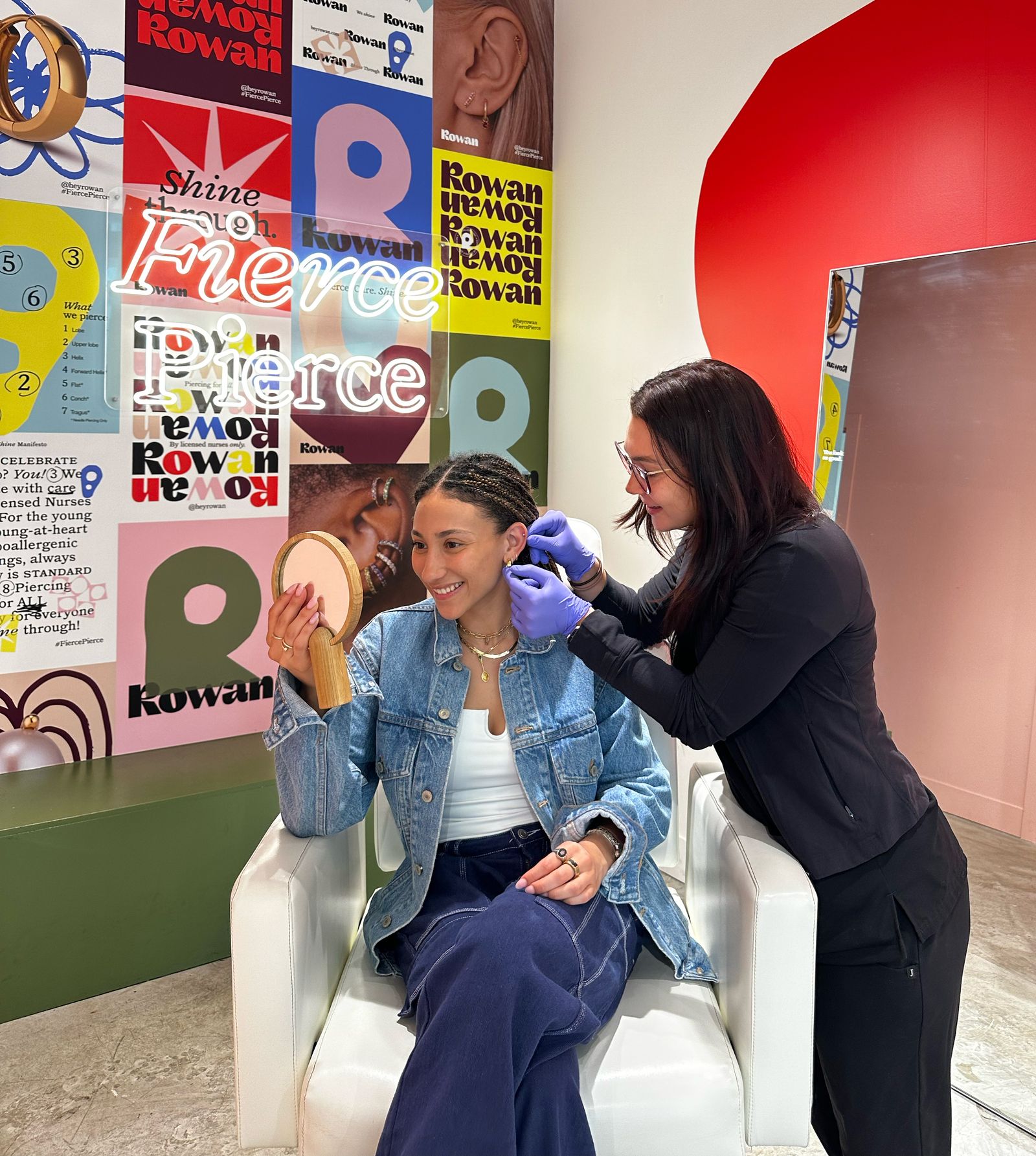
One nurse who left her hospital job to work at a non-traditional employer is Sarah Lacy. She quit her job in 2020 to work as a registered nurse in an ear piercing studio.
The New York City-based piercing studio, called Rowan, competes with hospitals for jobs and exclusively hires nurses to pierce ears.
The job gives nurses an opportunity to apply their medical skills without the “verbal abuse and physical abuse” that some nurses experience in the emergency room, Lacy said.
A Rowan nurse and client discuss a piercing placement.
Permission granted by Rowan
“When I first joined Rowan, I had no intention of leaving the hospital. At the time, it was a part time job, and I thought it would be a really fun way to get to use my nursing skills in a situation that is not stressful, like the way bedside nursing is,” Lacy said.
However, as she logged more hours at Rowan, Lacy came around to the idea of working full-time, piercing ears and training new nurses at Rowan. She said the biggest draw was the environment — studios were clean, people came to see her at some of their happiest moments and she got to apply her clinical expertise.
“I don't know what would be enough to draw me back to the bedside after this,” Lacy said. “As nurses, we have that innate desire to help people and to make a difference in people's lives. It’s transformational when you get to do that in a way that is so fun.”
“I really don't want to go back, if I'm being honest,” she said.
How hospitals can win nurses back
Although hospitals are struggling to hire and retain nurses, it’s not an impossible task, according to Pat Brown, EVP of human resources at Northwell Health.
Northwell, the largest health system in New York, operates 21 hospitals and had an average of 900 open RN positions in November 2023 — roughly the same number it did in 2019.
According to Brown, the health system boasted a turnover rate during the pandemic that was half the national average and kept stable staff through this year due to investments in recruitment and retention.
The hospital system has a network of almost 200 nursing programs. Northwell sends representatives to nursing career expos and even has a presence on TikTok.
Still, “The [nursing] supply is definitely constrained,” Brown said.
Other hospitals may benefit from similar strategies to recruit and retain staff, including partnering with nursing schools, offering virtual nursing roles that are less demanding, shorter shift options and “phased retirement” for older nurses, said Kaufman Hall’s Fitzpatrick.
“Organizations are essentially growing their own [nurses], and are willing to make that investment, because when you think about the impact long term, it makes financial sense,” Fitzpatrick said. “It could have a significant ROI when you look at balancing the upfront cost against the cost of contract labor.”
The strongest signal of an investment in nurses, according to nurses unions, is implementing nurse-to-patient ratios, which cap how many patients a nurse can care for at a given time.
Ratios can signal to nurses that hospitals are serious about patient welfare and workplace safety, said Debbie White, president of New Jersey-based nurse union Health Professionals and Allied Employees.
In 2023, White appeared alongside Sen. Bernie Sanders, I-Vt., at a field Senate Health, Education, Labor and Pensions (HELP) Committee in New Jersey to argue the benefits of fixed patient-to-staff ratios. She told Healthcare Dive that ratios might not bring back the Sarah Lacys of the world who have contentedly left the profession — but they could help stop the bleeding.
“I'm not telling anybody that nurses will come back to the bedside,” White said. “What I will promise you is that nurses will stop leaving hospitals. And if we fix that problem, we will retain staff. That is when we fix the profession.”
Article top image credit:
iStock.com/PeopleImages
Nurse leaders say the job is a ‘no-win’ role
Burnout and turnover remain high among overwhelmed and under-resourced nurse leaders, according to a study from AMN Healthcare.
By: Susanna Vogel• Published Feb. 28, 2024
The top three workplace challenges facing nurse leaders are staff recruitment and retention, burnout and labor shortages, finds a new study from AMN Healthcare, a talent acquisition company.
Only 34% of nurse leaders reported having a “great deal” or “a lot” of financial resources to address their workforce needs, and more than 70% say they sometimes, often or always experience burnout.
Resource constraints and burnout may be linked to turnover intention, according to the study. Nearly a third of hospital nurse leaders report planning to leave their jobs.
Since the onset of the COVID-19 pandemic in 2020, the well-beingof clinicians has taken center stage as labor shortages, harassment from patients and a perceived lack of support from employers increased clinician burnout and turnover.
The AMN study, which surveyed hospital 186 nurse leaders, such as chief nursing officers and nurse managers between August and October 2023, found that leaders are suffering alongside their frontline staff.
Nurse leaders said they are tasked with weighing in on a growing range of topics from workforce management to setting the hospital’s strategic agenda.
For example, more than 80% of nurse leaders reported a medium to high involvement in their facility’s strategic mission or financial management. Others are involved in planning patient protocols or developing nurse education and training.
The majority report burnout associated with their expanding job requirements. A survey respondent said being a nurse leader is a “no-win role. No one is ever happy with you.” Another called the job “expansive, overwhelming, and all-encompassing.”
“Like millions of front-line nurses, nurse leaders are facing challenging work conditions that can exacerbate stress and fuel turnover,” said Christine Mackey-Ross, president of AMN Healthcare Leadership Solutions in a statement accompanying the survey. “The job satisfaction and personal well-being of nurse leaders therefore should be a primary concern of any healthcare facility seeking to maintain the continuity and effectiveness of its nurse staff.”
There are methods available to improve nurse hiring and retention that allownurse leaders to better plan for and address workplace needs with minimal disruption, according to Mackey-Ross.
Many are increasingly using technology to manage workforce operations. Approximately half of nurse leaders use virtual interview platforms to hire, such as online interview tools, while 47% use online tools to streamline onboarding. However, some nursing leaders report financial barriers to implementing such tools or a lack of informational technology expertise.
To meet their scheduling needs, nearly 60% of nurse leaders use internal float pools, which allow hospitals to act as their own travel nurse agencies and assign permanent staff nurses temporary assignments.
Float pools were the most frequently cited tool used to manage workforce needs, and respondents said it was the most effective option to improve scheduling. Sixty-five percent of respondents said internal float pools were extremely or moderately useful at improving hiring and scheduling processes in their facilities.
Nurse leaders say they alsouse contingent nursesto address turnover among the permanent nurse staff, meet hospital quality goals or scale up operations.
Article top image credit: Jirapong Manustrong
Healthcare labor churn increased through 2021, study finds
To keep up with elevated COVID-19 turnover, healthcare organizations hired more workers who were unemployed or hadn’t previously worked in the industry
By: Susanna Vogel• Published Jan. 29, 2024
There was a “substantial” increase in healthcare quits during the COVID-19 pandemic in 2020 and 2021 compared to 2018, according to a study published in JAMA Health Forum.
Early in the pandemic, researchers found most departing workers quit without a new job lined up. However, by 2021, workers increasingly left healthcare positions to pursue roles in other industries.
Though turnover was high, employment rates remained relatively stable through 2021 due to the industry’s ability to attract new talent. However, researchers said new hires during the pandemic often lacked experience and were hired from non-healthcare professions.
This study, which analyzed jobs data between 2018 and 2021, adds to research suggesting the COVID-19 pandemic exacerbated healthcare staffing and care quality concerns.
A disproportionate number of Black and female professionals left healthcare roles during the study, while fewer Black workers entered the field. The researchers warned continued poor recruitment and retention of Black workers could impede patient care.
Meanwhile, healthcare organizations increased the hiring of unemployed individuals and workers without healthcare backgrounds in 2021 by nearly 30% and 20%, respectively, compared to 2018.
Healthcare professionals — particularly nurses — said that high levels of burnout during COVID pushed seasoned professionals to seek early retirement or alternate jobs, contributing to a brain drain in the industry.
Article top image credit: Getty Images via Getty Images
How healthcare providers are combating burnout
Today's healthcare workers continue to suffer from burnout in the form of long work hours, increasing mental health issues and ignored complaints. Health systems are now offering better pay and more enticing benefits, and tech companies promise their products will help automate tasks so providers can spend more time caring for patients.
included in this trendline
Healthcare labor shortage predicted by 2028, with uneven state impacts: report
Dissatisfaction with EHR increases nurses’ burnout risk: report
‘Seconds matter’: Canopy CEO Shan Sinha on healthcare violence and protecting workers
Our Trendlines go deep on the biggest trends. These special reports, produced by our team of award-winning journalists, help business leaders understand how their industries are changing.